There really isn’t a stable definition of energy. But simply, energy is the ability to do work
What’skineticenergy?
This is the energy possessed by a moving object. This is the work done by accelerating an isolated object from rest to a final velocity. Kinetic energy is equal to half the mass of the object times it’s square velocity
What’s potentialenergy
This is the energy possessed by a seemingly stationary objected subject to a force (regularly gravitational and elastic). The gravitational potential energy is equal to the object’s mass times gravitational acceleration (about 9.8 meters per second squared) times the vertical height.
Energy exists all around us, but in different forms.
Light energy
Sound energy
Heat energy
Nuclear energy
Chemical energy
All these are forms of energy. So next time when you’re taking a walk, look around and observe so many forms of energy
There really isn’t a stable definition of energy. But simply, energy is the ability to do work
What’skineticenergy?
This is the energy possessed by a moving object. This is the work done by accelerating an isolated object from rest to a final velocity. Kinetic energy is equal to half the mass of the object times it’s square velocity
What’s potentialenergy
This is the energy possessed by a seemingly stationary objected subject to a force (regularly gravitational and elastic). The gravitational potential energy is equal to the object’s mass times gravitational acceleration (about 9.8 meters per second squared) times the vertical height.
Energy exists all around us, but in different forms.
Heat energy, light energy, mechanical energy, nuclear energy, sound energy, you name it.
I don’t know if this kind of paradox already exists or already thought of. This is just a thought experiment, I’m not sure of, but I thought I should share. So here it goes.
The future should be constant and cannot be changed, right? So, suppose you are able to peek into the future (using some device) and you see a that, um… your younger sibling dropped your phone and broke it, an hour from now, while playing with it. Let’s also say this was a really pricey phone you recently bought. What are you going to do? Take it back, right? If you do so, it means your phone never broke. And then the future you saw was “wrong”. But this cannot be so, the future must always be right, it means that what you might have seen initially wouldn’t be a broken phone, so you would have no reason to save it. And if you didn’t, well you know what happens right. Now, the big question is what displays on the time machine, a broken or not broken phone… or both
You can see were this is headed, time travel paradoxes are nerve racking. What if we built a time machine we’ll spend most time trying to unravel paradoxes. How are paradoxes corrected by time? The seemingly best way to find out is to cause a paradox. In fact there is almost no way to not cause a paradox by time traveling. Well, unless you’re using the MCU’s time traveling theories… it’s best not to joke with time. Gniddik tsuj.
That wasn’t Japanese. It’s quite easy to crack. So let me see your comments about this paradox below. Thanks.
It’s kind of an understatement to say we encounter friction every day. Friction is the reason we can even move or hold items and… live.
What is friction?
Friction in physics is a resisting force which interacts with an object moving through a medium or across a surface. It is that resistance you feel, pushing back, when you are trying to use a rubber eraser, or trying to slide across a rough surface.
What causes friction?
Friction is associated with motion: most moving objects must encounter friction. It is caused by tiny irregularities between the surfaces in contact.
Most objects are not perfectly smooth so this tiny irregularities undergo a lot of intermolecular interactions some are: cohesion (if similar materials are in contact) and adhesion (if dissimilar materials are in contact). Friction also occurs if the irregularities between surfaces in contact interlock which requires more force needed to break this lock hence moving the object.
Forms of friction
There are two forms of friction: the static and kinetic friction. Static friction is the frictional force which is needed to be overcome before the object begins motion. And kinetic friction is the frictional force acting on a moving object, slowing it down. This is the external force acting on the object to bring it to a halt. So, no matter how hard you kick a ball… it will always stop (Newton’s first law of motion)
RULES OF FRICTION
Friction obeys some discovered rules:
Firstly, friction is independent of the surface area of contact between the surfaces. So regardless of which area of contact between two bricks of equal mass, one stood with the length at the bottom, and one with the length upright dragged on a surface. The friction in both bricks are the same.
Secondly, kinetic friction is independent on velocity. The same force is required to erase a mistake with a rubber eraser, regardless of its speed. Although this is only an approximation.
Thirdly, kinetic friction on a horizontal surface is proportional to the weight of the moving object. When a surface isn’t horizontal, kineticfriction is proportional to the perpendicular, or normal, force applied to the surface by the object.
Finally, friction depends on the nature of the surfaces in contact. As you’ll probably know, sand paper offers more friction to polished glass.
Economicimportance
Friction causes a lot of work for people. It wears out the sole of our shoes and our tires.
And since friction is associated with movement most machines and tools specifically those that are meant to move, such as bikes, cars erasers, fans will all wear out someday. Some rather quickly, like, most people would have changed their tires, fan belts, and shoes when they wore out. It’s also a good reason why perpetual motion machines are viewed as a “joke” , due to the energy “lost” (usually in the form of heat and sound), thanks to friction. A lot of effort is being put forth to reduce this wasted energy, such as the invention the ball bearing and lubricants (such as oil and graphite).
Although friction causes problems to engineers and machine users, it is also almost nearly impossible to live without friction: as we will not be able to walk, hold things, eat, drive, and write without friction.Just imagine if friction went off right now: you’ll immediately slip and fall and keep on sliding to the nearest dip. All the pictures on you wall would fall off as the nails slip out of the holes, the thread on everyone’s clothes will begin to unravel followed by numerous car accidents as cars brakes don’t work. Buildings would collapse. Earthquakes will occur. All these followed by even worse disasters will occur, if not for friction.
Thanks for reading this far, and I hope you’ve learnt a great deal about friction, and our love-hate relationship with it.
Forces are the reason an object moves, stops, and accelerates (speeds up). Every single second we interact with forces of attraction and repulsion.
Newton’s laws of motion
Isaac Newton published his PhilosophiaeNaturalis Principia in 1686. He presented three laws of motion in this Principia. This awesome laws can predict and describe motion precisely.
Newton’s first law
This law states that: Every body persists in a state of rest or of uniform motion in a straight line unless it is compelled to change that state by forces impressed on it.
This law simply says that an object will continue to stay at rest unless forced to move by an external force. As you know your book wouldn’t move across the table on its own, someone or some force, would have had to move it. Even a moving ball would tend to stay that way unless forced to stop. Someone’s probably thinking “but when I kick my football it always come to a stop with nothing acting on it.” or something similar. Even if it appears that way, there’s a force acting on it, friction (search my posts for friction if you want to learn more). Friction is forcing the ball to rest. Also, a moving object always travel in a straight line so no matter how hard you spin a ball before letting go, it will always fly off on a straight line, you might be thinking of some scenario that this “didn’t happen” maybe spinning a rock with a string (or something similar). In this case the rock is being forced to move because of the force acted on it by the string.
Newton’s second law
It states that the force applied to an object equals the time rate of change in momentum. Or simply: the force applied to an object is directly proportional to its mass and acceleration ( that is, increases with its acceleration) this can be derived from the initial law.
Newton’s third law
This laws states that for every action there is an equal and opposite reaction. This law applies for ever action we do literally, walking, sitting, name it. Any force applied to something has an equal force acting in the opposite direction.
Types of forces
There are four fundamental forces of nature. (1)The strong force: the strongest of all. The force exists within an atoms nucleus. It is the force that holds an atoms nucleus together. It is a short range force. (2) The electromagnetic force: this force exists between two electrically charged bodies. It is either an attractive (between unlike charges) or repulsive force (between like charges). The electromagnetic force is inversely proportional to the square of the distance between the charge bodies. (3) The weak force: this force is responsible for certain particle interactions in the radioactive decay of atomic nuclei. (4) The gravitational force: this force is the weakest, think about this, it takes the entire earth to pull a pen to the ground, but a child can easily counteract its force by lifting the pen. This force exists between matter.
Note that some of this forces will be explained in greater detail in upcoming blogs. Thanks for reading.
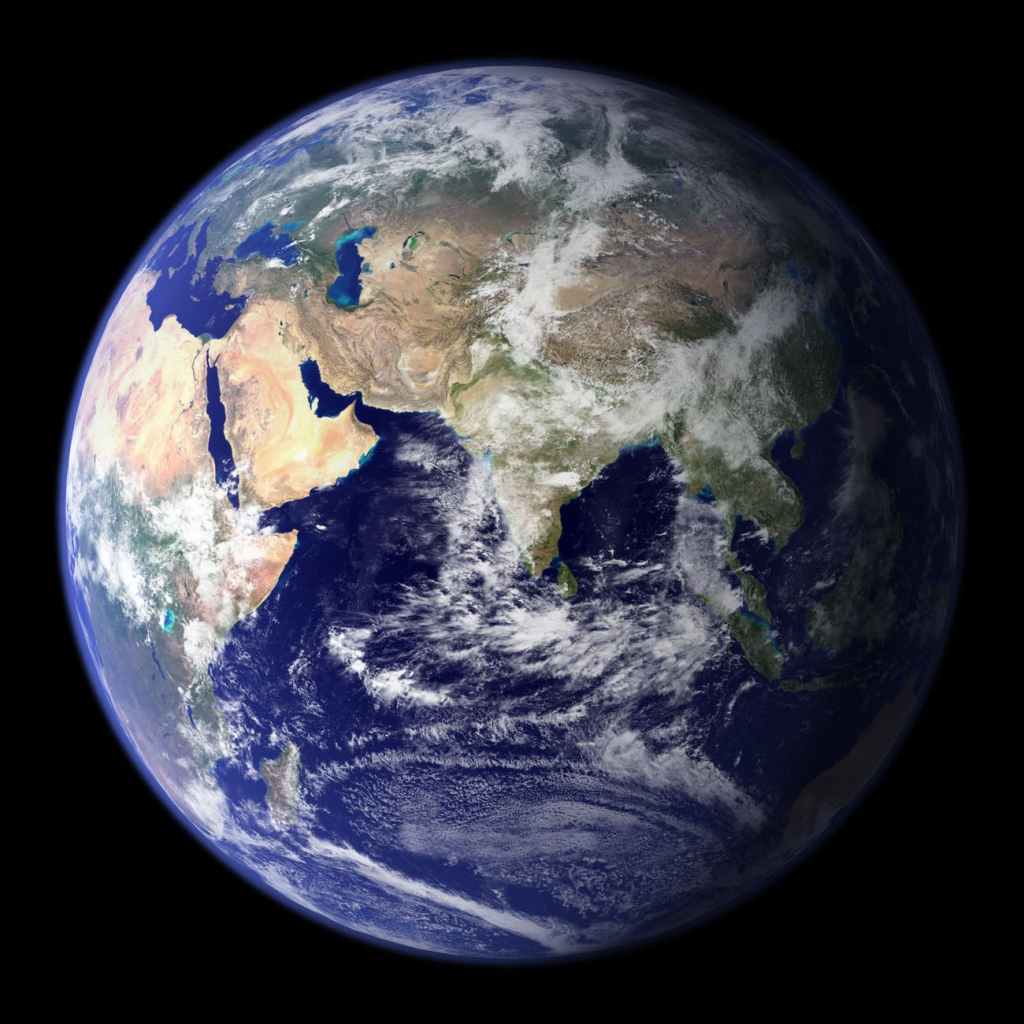
Someone recently asked me this question. And then I thought most people might have asked themselves this question at some point in time, I asked myself this question once I knew that the earth spins.
Currently the earths angular velocity is about
So why don’t we feel that outward pull? The reason is because we all are moving at the same angular velocity. Every single thing on this earth (trees, grasses, air) is moving at a constant speed. A speed which is extremely slow (0.00007292115 rad/s). Or to put it simply it makes one rotation every 24 hours (one day to spin once). This slow effect is combined with the fact that we are traveling at the same slow speed with the earth (analogy: imagine being on a plane, you might not feel it moving, but it’s moving really fast). Lastly, gravity is also involved, well, by pulling us to the ground.
Hello! I’m a physics enthusiast concerned with helping students and people overcome their “fear” of physics. I’ll try my best to simplify basic physics concepts. Also I’ll blog about recent science and technology breakthroughs. I will also answer a lot of questions (physics mostly) we ask ourselves daily. You’ll soon find out that we encounter physics a lot more than you think.
Thanks for opening and reading this. Read more soon.













 Daily Physics