Answer. No.
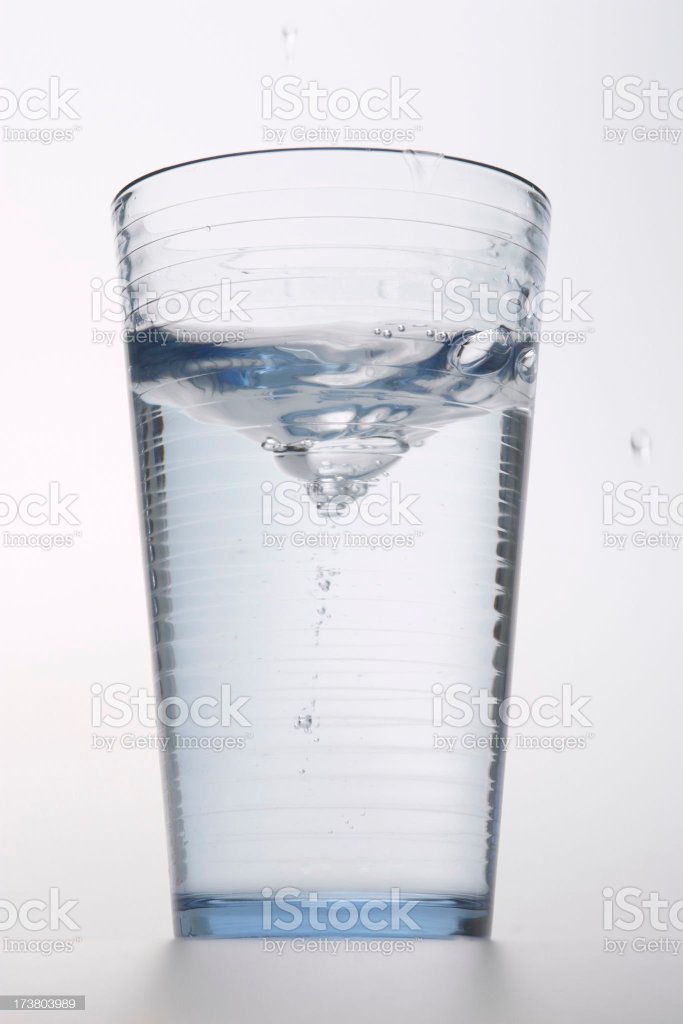
The basic concept makes sense. Temperature is literally kinetic energy. When you stir a cup of water, you’re adding kinetic energy to it, and that energy has to do something. Since nothing out of the ordinary happens to the cup, like the water doesn’t emit light, the energy must be turning to heat.
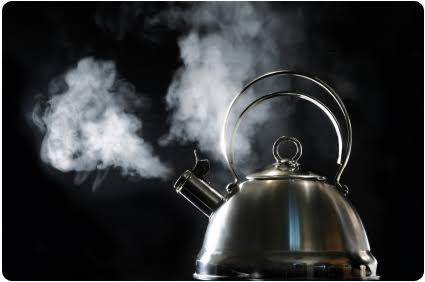
The reason you don’t perceive the heat is that you’re not adding very much of it. It take an enormous amount of energy to heat water; by volume, it has a greater heat capacity than any other common substance.
If you want to heat water from room temperature to almost boiling in two minutes, you’ll need a vast amount of power, plus extra if you want the water to actually boil. I’ll help with the calculation but the formula is: mass x water heat capacity (4184J/(kgK)) x temperature change. Which is about 700 watts.
Our formula says that if we want to make a hot cup of water in two minutes, we’ll need to have a 700-watt power source. A typical microwave uses about 700 to 1000 watts, and it takes about two minutes to heat a cup of water( depends on the mass of water), so we are approximately correct.

But, how does stirring compare to microwaving? Based on figures from industrial mixer engine report, vigorously stirring a cup of water adds heat at the rate of about a ten-millionth of a watt. That’s absolutely negligible.
The physical effect of stirring is a little bit complex due to many possible scenarios. Most of the heat is carried away from hot water due to air convecting over them so they cool from top to down. Stirring bring fresh hot water from the depths so it could help with cooling.
So, could you boil a cup of water by stirring hard?
No.
The first problem is power, about 700 watts.
You can reduce the power requirement by heating the tea over a longer period of time, but if you reduce it too far, the tea will be cooling as fast or even faster than you’re heating it.
Even if you could turn the spoon fast enough, like hundreds of thousands of stirs a second, fluid dynamics would obstruct you. At those speeds the water would cavitate; a vacuum would form along the path of the spoon and stirring would become ineffective. ( It would even spill from the cup before you reach those speeds.)
And if you stir hard enough that your water cavitates, its surface area will increase very rapidly, and it would cool to room temperature in seconds.
So, No matter how hard you stir a cup of water, it not going to get any considerably warmer
Thanks smart people, hope you enjoyed the blog.

 Daily Physics